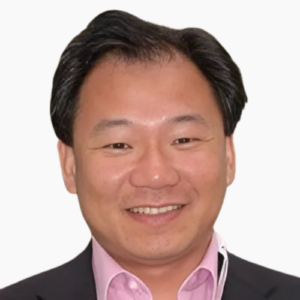
Victor Chong
Chief Medical Officer Clearside Biomedical
Dr. Victor Chong, M.D., MBA, joined Clearside Biomedical in March 2024 as Chief Medical Officer and EVP, Head of R&D, leading suprachoroidal therapy development. A board-certified retinal specialist with over 25 years of experience, he previously served as VP, Global Head of Retina at J&J Innovative Medicine and led ophthalmology R&D at Boehringer Ingelheim, where he advanced 11 candidates into clinical trials across wet AMD, DME, DR, DMI, and geographic atrophy. His lab first linked systemic complement C3 activation to AMD. Formerly Head of Ophthalmology at Oxford Eye Hospital, he holds an MD (research), MPhil, and an MBA.
Seminars
- Why does early recruitment remain a bottleneck, especially for injected therapies in conservative indications like glaucoma?
- How do we design devices and protocols for operators who aren’t traditionally trained in injection procedures? • How do we push back against unrealistic investor timelines and expectations for one-and-done cures?
- What happens when a formulation looks great in vitro but fails due to real-world hurdles like sterilization or inflammatory responses?
As interest in the suprachoroidal (SC) space grows, delivery devices have become the frontline challenge in getting therapies to their target. From microneedles to catheter-assisted injectors, a range of tools are emerging but none without trade-offs.
- Explore how microneedles, tangential injectors, and catheter-based systems differ in precision, invasiveness, and adaptability for posterior segment access
- Innovations in injector geometry and deployment angle are aiming to balance depth control with patient comfort and procedural simplicity
- Success hinges on aligning therapeutic goals with delivery depth, spread, and reach, especially in gene therapy and posterior disease, where IVT often falls short and subretinal carries surgical risk
- Strategic collaboration across device makers, formulation teams, and clinical partners is critical to avoiding translational misfires and maximizing therapeutic potential