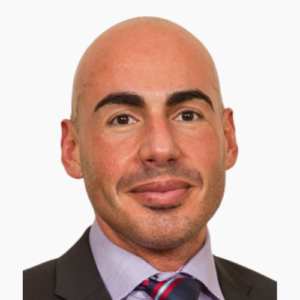
David Almeida
Vitreoretinal Surgeon-Scientist Erie Retina Research
Dr. David R.P. Almeida is a vitreoretinal surgeon and clinician-scientist (MD, MBA, PhD in pharmaceutical sciences). He is Chief Retina Strategy Officer of Lexitas Pharma Services, President & CEO of Erie Retina Research, a Lexitas company, and Founder of The Centers for Advanced Surgical Exploration (CASEx), a global network of nine research sites. Principal investigator on more than 100 trials across phases 1–4 with a 100% FDA audit record, he has authored over 200 peer-reviewed publications (h-index 42) and holds 12 issued US patents. His current focus is verifying ocular drug delivery and engagement: the NRSS human tissue platform and TEMPO tear proteomics.
Seminars
Thursday 21st January 2027
Did the Drug Get There, & Did It Work? Verifying Target Access, Drug Engagement & Clinical Translation in Ophthalmic Drug Delivery
10:30 am
- Showcase proving placement with the Near-Real Surgical Specimens (NRSS), a reperfused human ocular tissue platform, as the true human analog for testing delivery devices, with real-time OCT and contrast visualization of suprachoroidal access (inter-specimen CV 6.8% vs 17.7% in cadaveric eyes; TVST 2025)
- Demonstrate accelerated from bench to investigator translation and how the same platform trains and certifies trial PIs on suprachoroidal gene-therapy injection (ICG confirmation of the space) and de-risks first-in-human studies across multiple sponsor programs
- Introduce TEMPO tear proteomics from a Schirmer strip as a non-invasive pharmacodynamic readout, ~3,000 proteins, quantified receptor-pathway inhibition and washout after an IGF-1R biologic in thyroid eye disease, and what this means for precision dosing and payer evidence
Thursday 21st January 2027
Panel Discussion: How Can We Improve Clinical Translation by Bridging the Gap Between Preclinical & Human Studies
11:00 am
- Discuss common causes of translational disconnect in efficacy, durability, safety, and immunogenicity from preclnical studies to humans
- Compare the strengths and limitations of rodent, rabbit, minipig, and nonhuman primate models for disease modeling, PK/PD characterization, biodistribution, and safety assessment.
- Discuss the potential of organoids, microphysiological systems, ex vivo human ocular tissues, and computational modeling to complement or replace traditional animal studies.
- Discuss common deficiencies, evidence gaps, or study design limitations that lead to regulatory questions, delays, or clinical holds for preclinical IND packages